Copy Trading Loss Lesson 1: The “Top Trader” on the Platform Is Not a Neutral Actor
Copy-trading losses often come less from a broken strategy than from copying a person with emotions, incentives, and multi-account setups. This piece breaks down human risk, retaliation, hedges, spot-futures mismatch, and liquidity traps.

Why do copy traders keep losing money? Short answer: in most cases it is not that the strategy itself failed, but that you are copying a person with emotions, private incentives, and multi-account operations—not a neutral, fully reproducible system.
As an independent crypto developer, I have researched many quantitative approaches, worked with major exchange APIs, and built copy-trading scripts and even SaaS products. In this space I am both a builder and an active trader: I have observed many traders, some officially lead-trading, others only publishing live accounts. Platform mechanics, trader behavior, technical blind spots, and user psychology are familiar ground.
The deeper you look, the harder it is to avoid one fact: most people who try to “copy a top trader” still leave at a loss. That is usually not because copy trading is inherently useless, nor because one trader or one platform alone is to blame. It is a multi-layered, systemic loss structure.
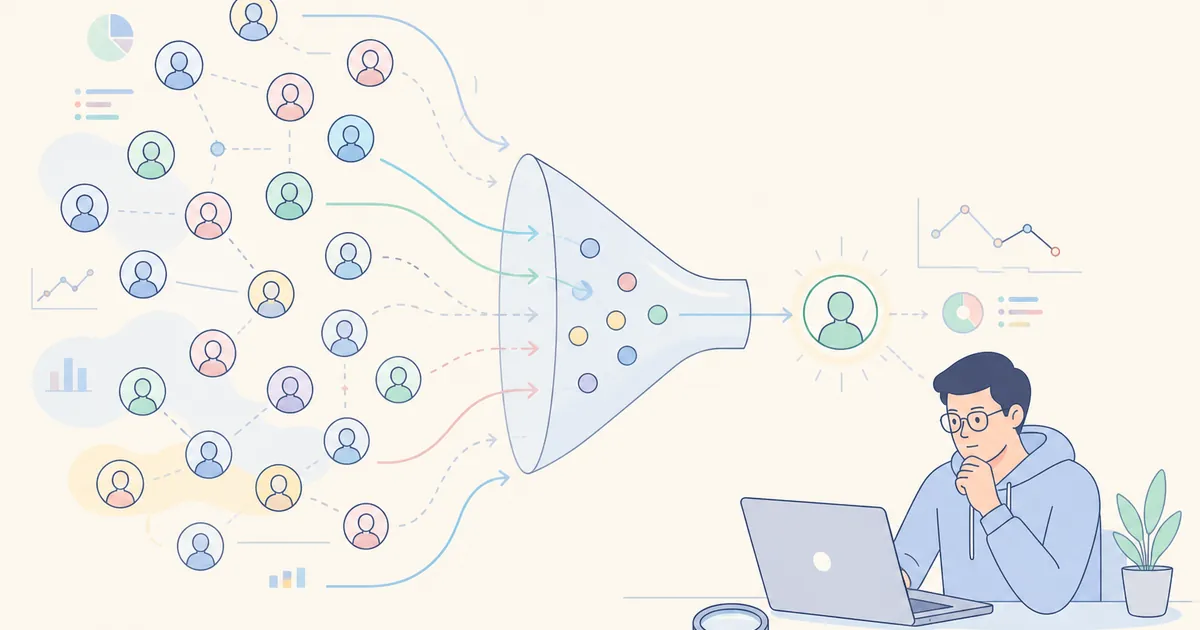
So I am writing a series that unpacks the roots layer by layer. This first piece focuses on the most overlooked yet most critical point: what you are following is not only a strategy, but a person with emotions and private interests.
Risk notice: Copy trading and derivatives trading both involve risk of capital loss. This article is observation and mechanism analysis, not investment advice, and does not guarantee any return.
Based on the author's first-hand notes from 2023–2026 across multi-exchange copy scripts, public live-account observation, and client trade reviews. The ~0.3s latency comparison comes from fill logs under the same trader in different network environments, not lab backtests. For industry context, see exchange product pages: Binance Copy Trading, OKX Copy Trading, and the overview Copy trading (Wikipedia).
Phenomenon vs Mechanism: What You See vs What Actually Happens
What you assume
A public live-trading “star” ≈ a trustworthy, neutral “fund manager”
What is really going on
Display motives are often traffic and monetization; the public layer is not an altruistic layer
What you assume
Copy trading means replicating the same strategy
What is really going on
You are following a person with emotions, self-interest, and incentive structures
What you assume
If their account is losing, they are losing too
What is really going on
There may be multi-account division of labor: performance account vs real account
What you assume
If they make a huge profit, you should benefit in sync
What is really going on
With futures/spot/margin mismatches, the copy system may not have followed at all
What you assume
Being a bit slower only means earning a bit less
What is really going on
In liquidity-grab scenarios, latency systematically transfers profit
1. The Human Constraint: Traders Are Not Neutral Actors
Many people assume platform “star traders” resemble constrained fund managers—with rules, long-term responsibility, and relatively neutral goals. Reality is often different.
Many traders never enable official lead-trading. They publish live accounts and settlement records less from altruism than for traffic and influence monetization: grow followers quickly, then convert into rebates or other monetization paths. Building a “mythical persona” can be more valuable than taking a direct profit share.
There have been cases where a trader became a platform icon through extreme returns while never lead-trading. As a follower, you only see what they are willing to display; the real trading logic, position intent, and account structure may remain hidden.
Worse is incentive misalignment: when you make money and they do not capture corresponding upside, emotions can slowly distort. Once a copy relationship lacks aligned interests, human nature becomes a risk you cannot hedge cleanly.
Section takeaway: A public live account is not a neutral advisor; the display layer and the motive layer often diverge.
2. Retaliation After Misalignment: You May Be Getting “Punished”
There is a high-conflict pattern in the industry: a trader discovers silent bot following, cannot earn a share from those followers, and grows resentful.
I have observed incidents like this: after learning they were being followed by scripts, a prominent trader suddenly withdrew most funds, left a tiny balance, then behaved abnormally—chasing pumps with heavy size, adding against the trend, trading hard-to-explain coins frequently; after a major drawdown, they posted on the platform to provoke silent followers.
You can call it an edge case, but “blind bot following” is indeed among the behaviors many traders hate most. The logic is direct:
- You profit; they may not
- You lose; they may still get blamed
- You are not their client, yet you become external risk on their account
Once the feeling of being “taken advantage of” forms, malicious countermeasures are only one step away. Cross that line, and followers face adversarial risk—not merely strategy volatility.
Section takeaway: When interests are misaligned, a trader can shift from “copyable object” to “adversary.”
3. Multi-Account Hedging: One Losing Account Does Not Mean They Are Losing
The live account you see on a platform is often only the slice they choose to show. Especially among influencers, almost no one runs every trading intent through a single account.
I once watched a trader whose OKX public account weakened for months in a choppy market, while another exchange account they posted socially looked unusually smooth—nearly a linear 45-degree climb. But the latter lacked verifiable, connectable public settlements, so followers could not copy it.
A common explanation is division of labor:
- The public account attracts attention and followers
- Another account runs the real strategy, hedge, or arbitrage
If you are following a “performance account,” you may be providing liquidity to their main book—or even helping lift prices for them. You think you are copying skill; you may only be a chip on the board.
Section takeaway: A single public equity curve does not represent a trader’s overall P&L or true strategy.
4. Mismatch: You Follow Futures, They Switch to Spot
Even without malice, mechanism mismatch creates “visible but uncopyable” outcomes.
Common mismatches include:
- You follow futures position changes; they suddenly buy spot
- You follow USDT-margined contracts; they switch to coin-margined contracts
I once followed a futures trader with a style close to low frequency, low win rate, and high payoff ratio. Scripted following worked for a while. Then one day they went full size into spot on a small coin and held for a long time. Their account return spiked, while my clients’ futures accounts barely moved. By the time it was clear, the move was over—and chasing was too risky.
Many copy systems mainly track futures position changes, while traders can freely switch between spot and futures. Result: you cannot fully reproduce their actions; their big win may have nothing to do with your account.
Section takeaway: What a copy system can replicate is usually only the position type exposed by the interface—not every action the trader takes.
5. Liquidity Traps: How Profit Moves from Followers to the Trader
A more covert pattern uses follower flow for “front-run then exit” style extraction. The rough path:
- Pick a mid/small-cap, high-volatility, medium-liquidity coin
- Build a position in the main account first
- Pull platform copy flow into the same side and push price up quickly
- Exit first at the target
- Followers trample each other and absorb the later move
Such setups often share a few traits:
- The coin is relatively niche, so simple risk narratives are less triggered
- There is still enough liquidity that one buy does not instantly explode their own entry cost
- Platform rankings favor short-horizon high returns, attracting newer followers
- Higher-latency followers are more likely to eat adverse fills
Two clients I supported once followed the same trader: one on a lower-latency network closer to the exchange, one on a common VPS. A ~0.3s exit delay alone could create a large return gap; the trader themselves often captured even earlier volatility.
In that structure, your latency and slippage can be part of their excess profit.
Section takeaway: When trader and followers compete for the same liquidity, speed and information asymmetry systematically hurt the back of the queue.
Conclusion: Trader Human Nature Is a Risk You Cannot Simply Hedge
Platforms often package traders as “copyable experts.” What really shapes your long-term outcome is the person behind the account: emotion, greed, fear, multi-account structure, hedge intent, and incentives.
You see a live equity curve; you miss human complexity. That is why simply copying trader actions rarely produces a durable profitable structure.
Later parts of this series will continue from platform mechanics, technical latency, risk controls, and user decision bias.
Quotable points
- A public live account is not a neutral role; display motives often diverge from follower interests.
- Incentive misalignment can trigger adversarial behavior, not only strategy failure.
- A single-account curve cannot represent a trader’s overall books and true P&L.
- Futures/spot (and margin-type) mismatches cause native copy leakage.
- In competitive liquidity scenarios, latency moves profit from followers to faster parties.
FAQ
What is the most common reason copy traders lose money?
Usually not a sudden strategy breakdown, but following a person with emotions and private incentives—plus misaligned rewards, sliced multi-account books, futures/spot mismatches, and latency disadvantages.
Does a high public live-account return mean it is worth copying?
Not necessarily. A public curve may be a display slice, not overall P&L. If the trader does not open official lead trading, incentives and constraints are harder to align.
How much can latency affect copy-trading returns?
In liquidity-race scenarios, a lot. Under the same trader, roughly 0.3 seconds of exit delay alone can create a large return gap between clients.
How can followers reduce “liquidity trap” risk?
Check incentive alignment, whether only a single display account is visible, whether the copy system covers spot/margin switches, and your own latency/slippage. Treat unexplained short-horizon “myth” returns with caution.
References
- Binance Copy Trading — official lead/copy product page for comparing “official lead trading vs public live accounts.”
- OKX Copy Trading — another major venue’s copy-trading entry point and incentive packaging.
- Copy trading (Wikipedia) — concept and historical background.
- About CopyApes — author/product background.
- Contact / [email protected] — feedback and support.
Copy trading involves risk. Decisions must be independent. Copying anyone’s positions cannot replace your own risk control.
Related blogs
Related Post
Expand your knowledge with these hand-picked posts.